
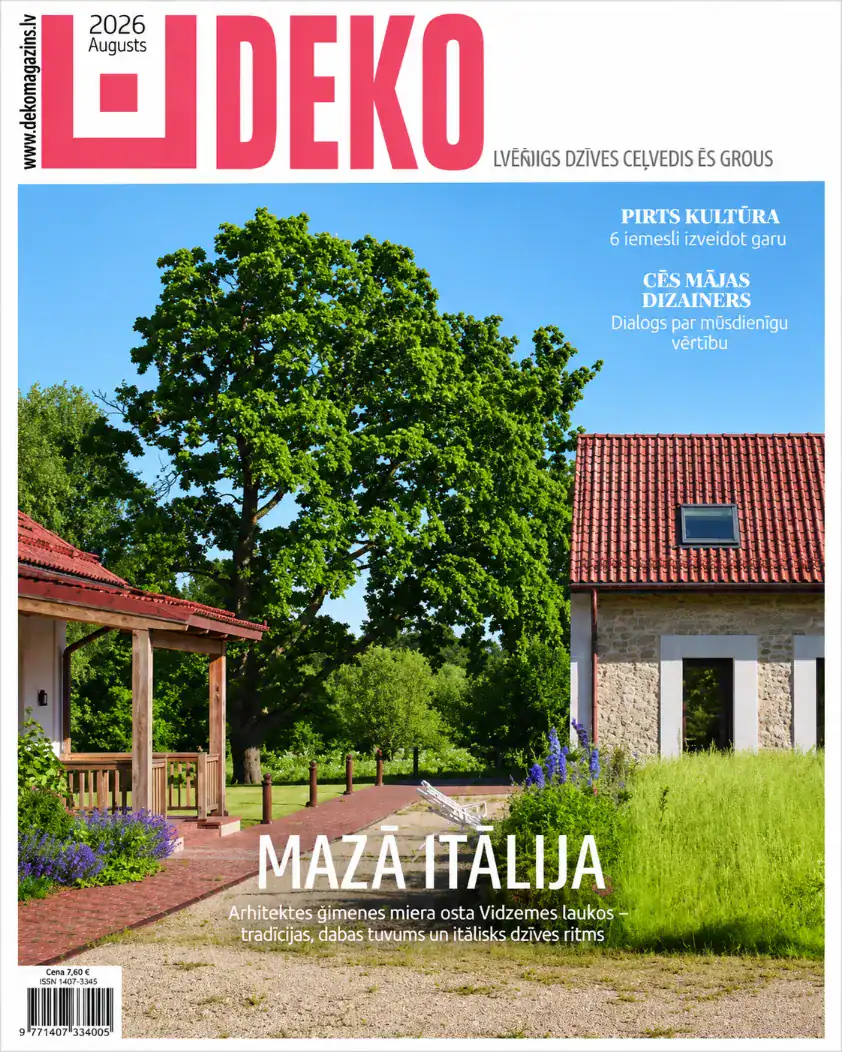
Interior designer Eva Broda opened the doors of her Riga apartment to Deko magazine (August 2026) for its “How Designers Live” series. The feature looks at how she turns any home, owned or rented, into her own ideal world.
For years Eva Broda only lived in homes she owned. Before leaving for Venice, she rented an apartment with her family in a historic building in central Riga. The flat already had quality renovations and parquet floors. Its windows faced Zirgu Pasts, where sounds of theatre and dance rehearsals from the Latvian Academy of Culture drifted in.
The move reflected a change in how she sees freedom. Rather than settling firmly in one place, she now chooses to follow the flow and embrace the unknown. In her view, no circumstance stops a person from making their living space a true source of joy.
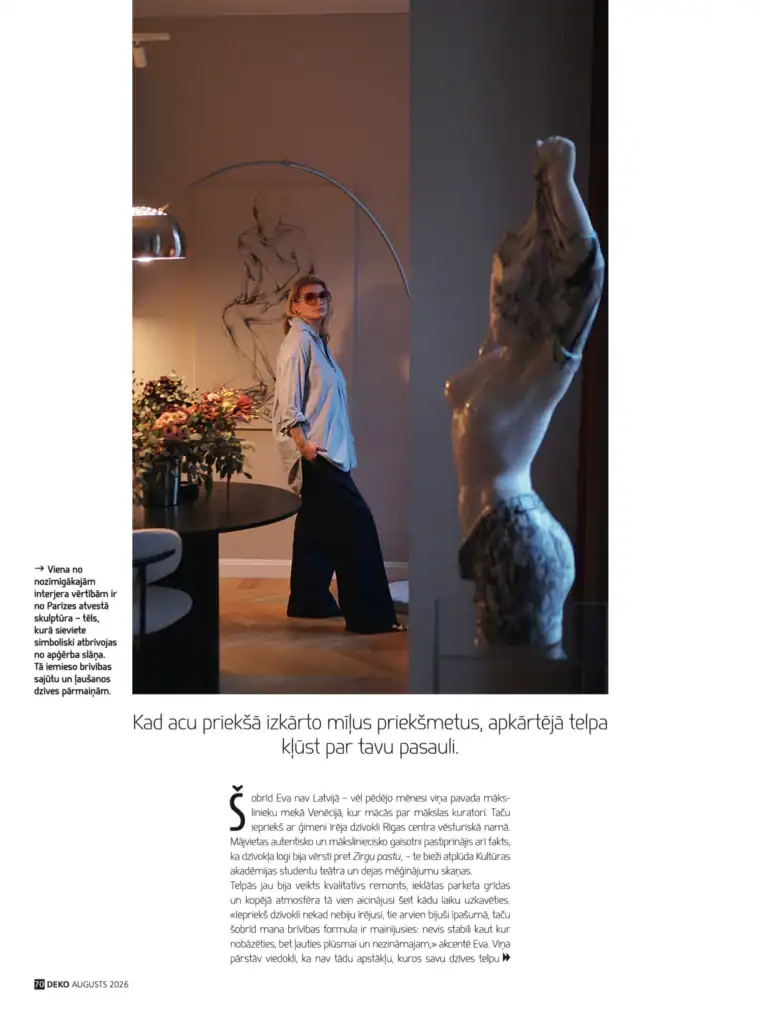
Eva believes it makes no difference whether a home is bought or rented. Beloved objects can always travel with you, carrying a personal interior language from one address to the next. When the things you love are arranged in front of you, she says, the space around you becomes your world.
Many people look for rest and visual pleasure in good hotels. Eva argues that the most effective reset happens in the place where we spend most of our time: our own home.
For Eva, the feeling of home begins with scent. It makes the first and strongest impression, before a room is even seen, which is why everyone remembers how their grandparents’ house smelled. Her own home carries notes of sandalwood.
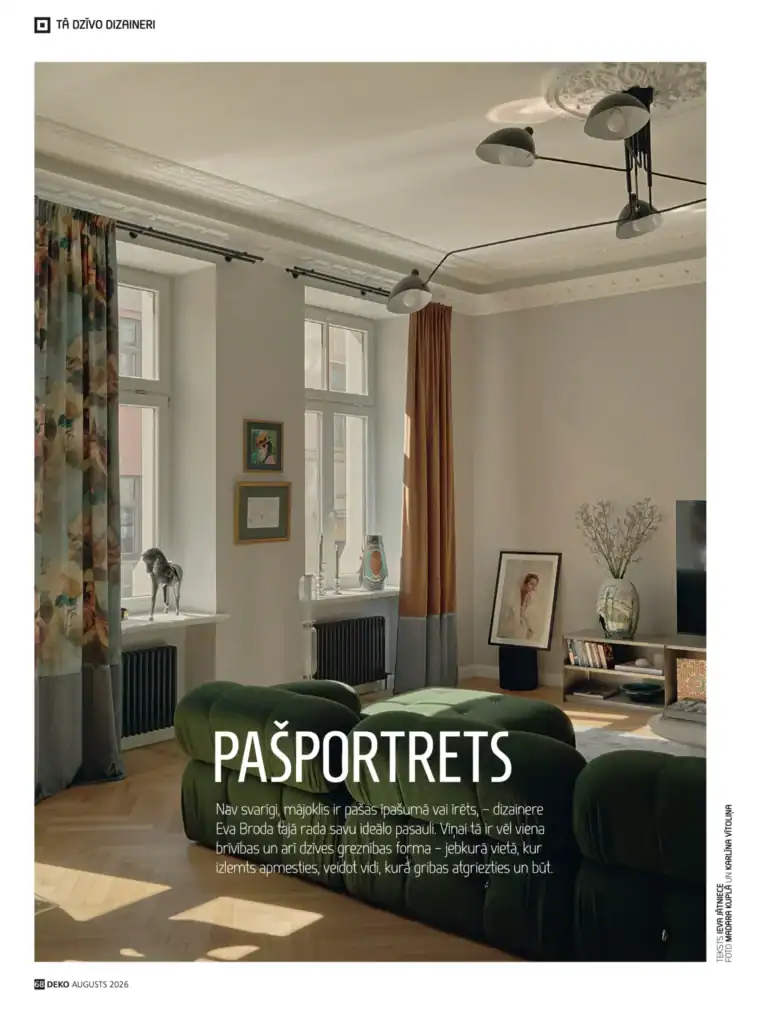
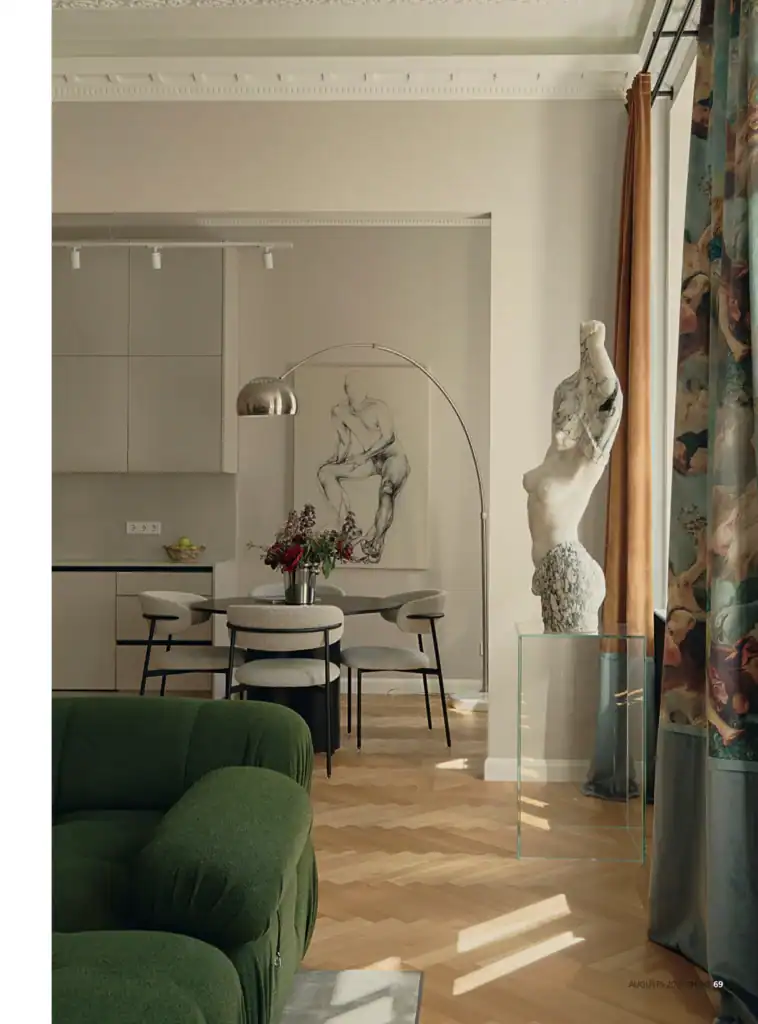
Next comes the view from the front door, and whether it lets you switch into rest mode. Sound matters too, and Eva keeps a collection of vinyl records. Lighting completes the mood: in one room she may use up to four floor lamps of different heights, sizes and materials, from metal and stone to glass.
Textiles set the foundation of a home’s atmosphere, even when they are neutral. Most of her curtains come from Pierre Frey and Dedar, bringing bold colours and patterns into the rooms. As she puts it, a home should address all the senses.
Wherever she lives, Eva brings her art with her. Her collection includes paintings and sketches by Barbara Gaile, Gunta Lante, Gundega Dūduma, Līva Pakalne-Fanelli, Džemma Skulme and Anita Arbidāne. Art is where every interior begins for her, in her own home and in her clients’ homes alike.
This is why she is currently in Venice, spending her final month studying to become an art curator. The goal is to broaden her perspective, see how Latvian artists look against a global backdrop, and help clients build collections that include artists from other countries too.
Eva always encourages clients to make room for family heritage. Authentic objects help tell each person’s unique story, so she urges people to repair beautiful things rather than throw them away, and to choose pieces they want to touch.
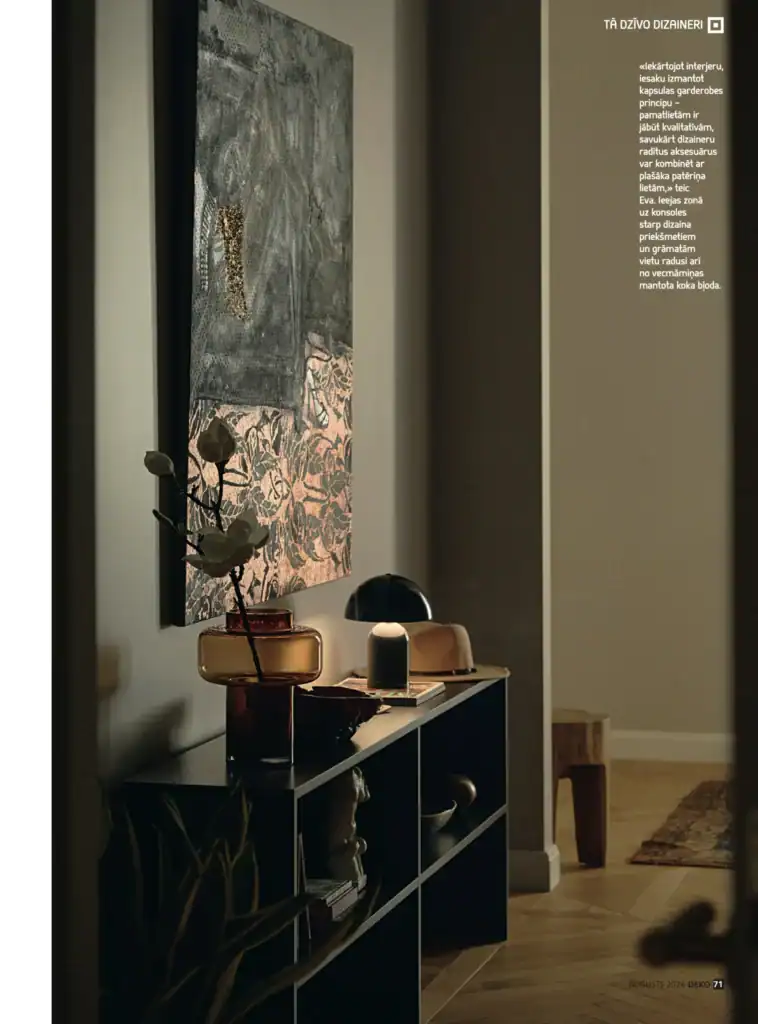
In her own home, a large hand-painted porcelain vase by Megija Zonne sits alongside her grandmother’s dishes and a collection of Latvian dainas (folk songs) that bring back warm memories. A wooden bowl, also inherited from her grandmother, has a place in the entrance among design objects and books. Her mother’s childhood teddy bear has been given a second life.
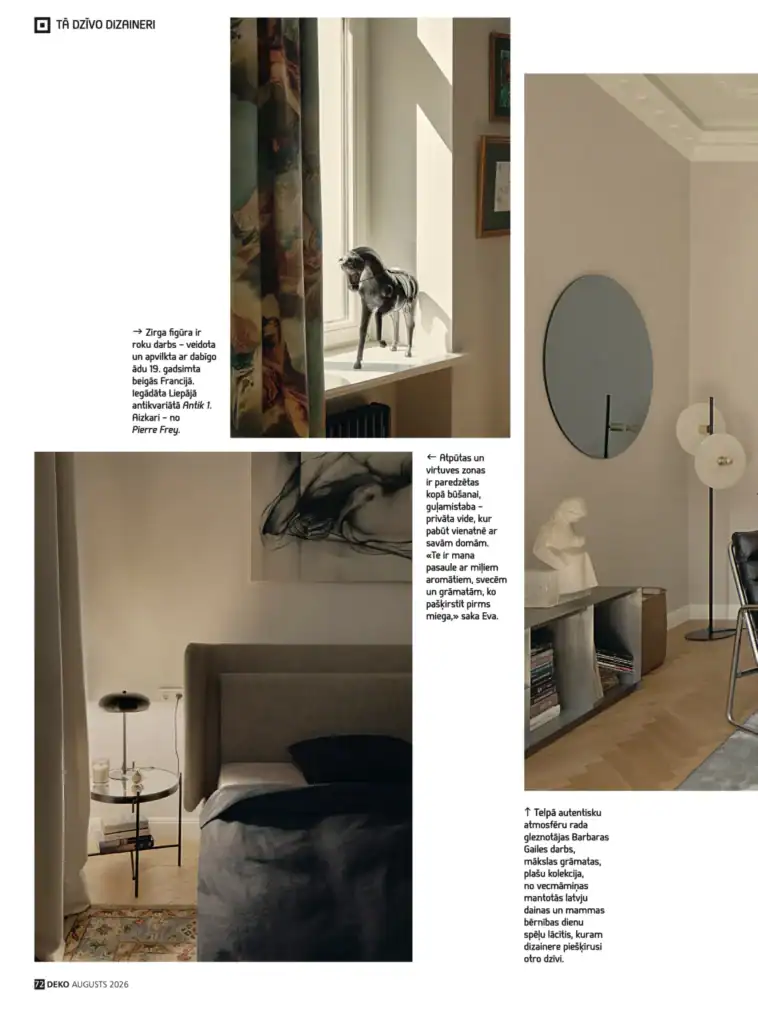
Other treasured pieces include a sculpture brought from Paris, showing a woman symbolically shedding a layer of clothing, a symbol of freedom and of embracing change. A hand-made horse figure covered in natural leather, made in late 19th-century France, was found in the Antik 1 antique shop in Liepāja.
When furnishing an interior, Eva recommends the same principle as a capsule wardrobe. The essentials must be high quality, while designer accessories can be mixed with more affordable everyday items.
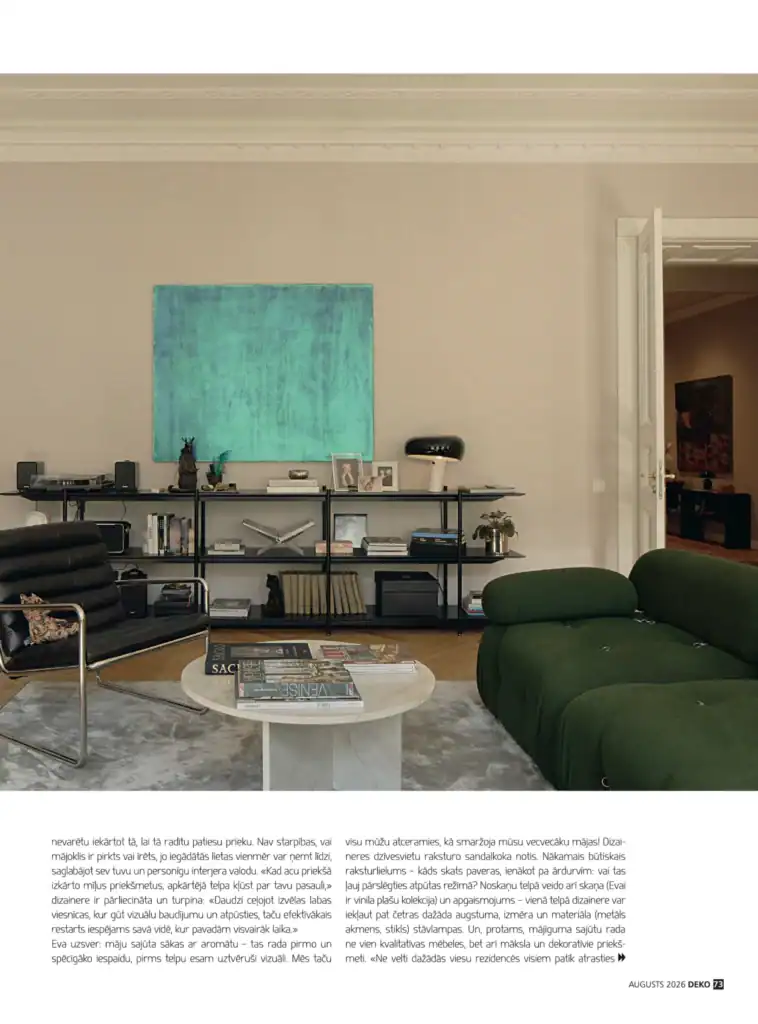
After designing many living spaces, Eva has noticed that a home works like a psychological portrait of the person who lives there. People who prefer lots of closed storage often do not want to reveal themselves to others.
In her early youth, Eva also kept things hidden behind doors. After turning thirty, she began using more open shelving. She links this to inner change: as we become more authentic, value ourselves and accept our past, we stop being shy about showing who we are. Not everyone is invited in, but those who are get to see everything.
Eva uses bright accents of green and blue in her apartment and encourages her clients to do the same. Every colour visible through the window can find a place inside, creating a dialogue with the outdoors. She suggests bringing nature in: large apple blossom branches in spring, bright rowan branches in autumn.
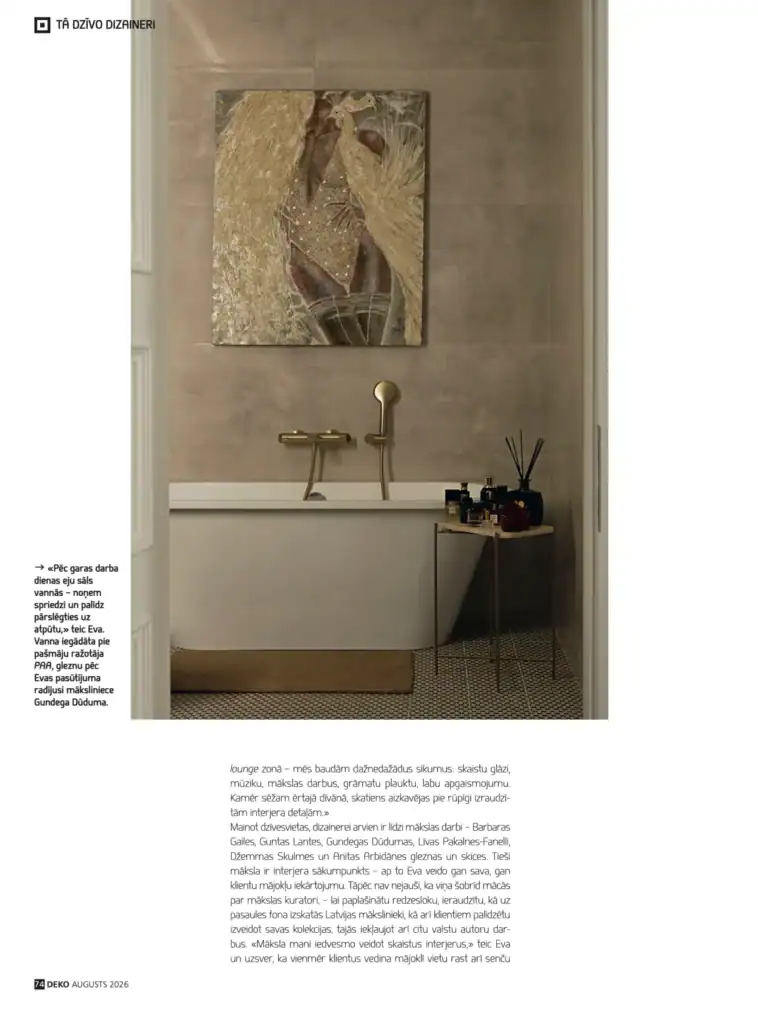
The living and kitchen areas are made for time together, while the bedroom is a private space to be alone with one’s thoughts, with favourite scents, candles and books to leaf through before sleep. After a long working day, Eva unwinds with a salt bath to release tension. The bathtub comes from Latvian manufacturer PAA, and the painting above it was commissioned from artist Gundega Dūduma.
For Eva Broda, creating a beautiful home is one more form of freedom and of life’s luxury. Wherever she settles, she builds a space she wants to return to and stay in, layered with art, inherited objects, scent, sound and colour. It is the same philosophy she brings to every client’s home.
This article is based on an interview originally published in Deko magazine, August 2026. Text: Ieva Jātniece. Photos: Madara Kuplā and Karlīna Vītoliņa.